![[More than 100 Swiss and Indian experts from academia, industry, public health and government participated in the 2 nd Indo-Swiss AMR Innovation Dialogue 2025]](/media/__processed__/e55/1_india-e7efaab0a04c.jpg)
Confronting Antimicrobial Resistance Through Indo-Swiss Collaboration
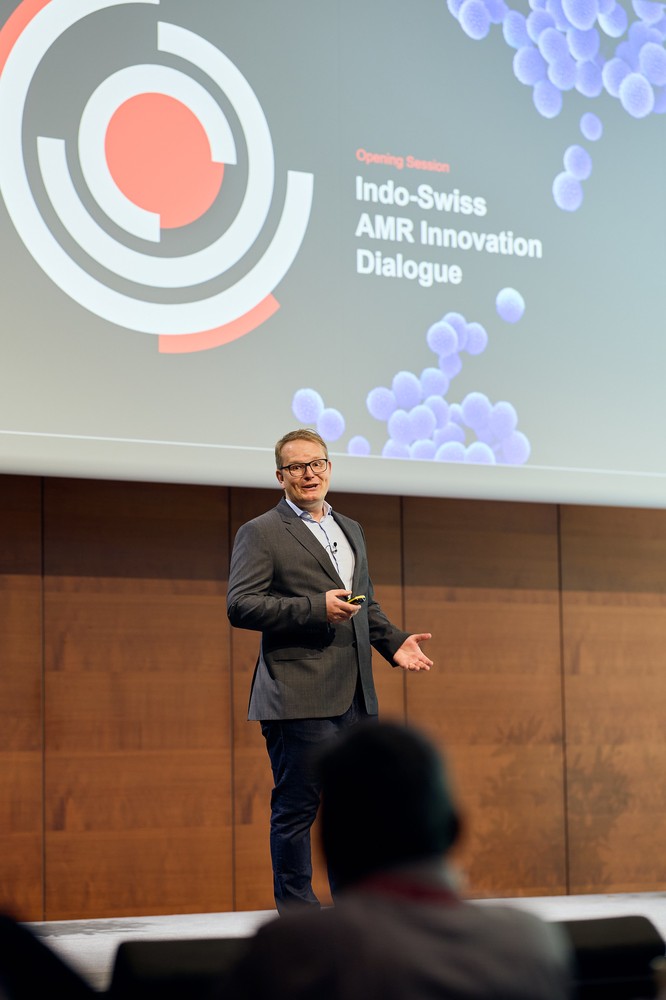
Bacteria, fungi and other pathogens do not recognise borders and neither does antimicrobial resistance. In Switzerland, over several days in 2025, voices from India and Switzerland came together across laboratories, hospitals, universities and innovation spaces to grapple with a shared challenge that is quietly reshaping global health. The 2nd Indo-Swiss AMR Innovation Dialogue brought together more than 115 researchers, clinicians, innovators, policymakers, funders and communicators to examine how antimicrobial resistance (AMR) is developing, and how it might be addressed, across systems, societies and scales.
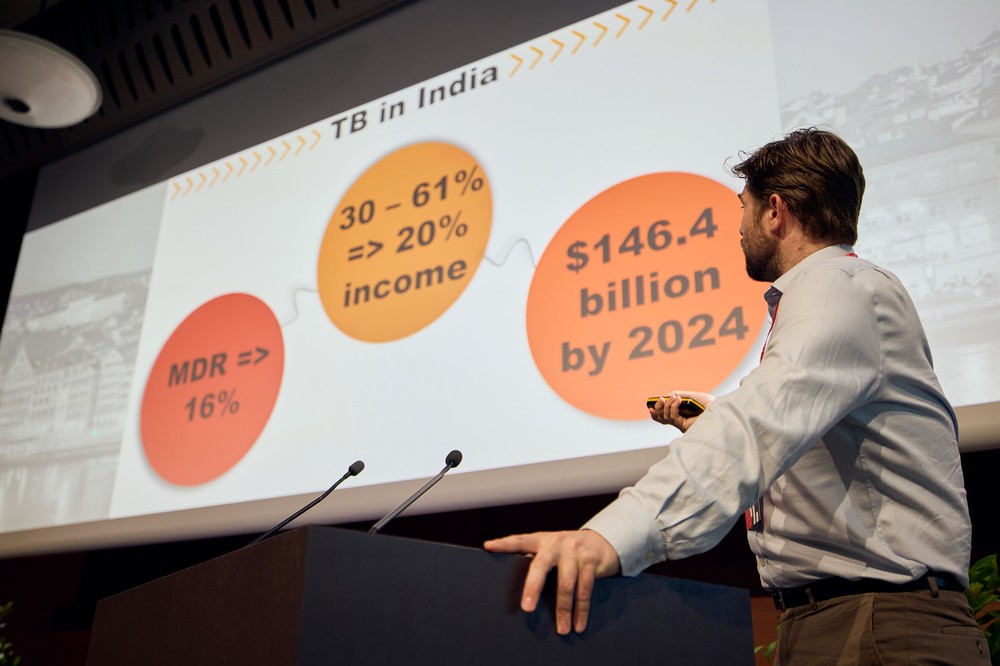
What started as an initial conversation with Prof. Markus Seeger, Associate Professor of Medical Microbiology at the University of Zurich, has since developed into a strong institutional partnership with UZH, the University of Geneva and Indian collaborators including the National Centre for Biological Sciences and the Indian Institute of Science Education and Research Pune playing a central role in shaping the Indo-Swiss AMR Innovation Dialogue. Building on the foundation laid by the first Dialogue in India in 2023, this second edition marked a shift from mapping the problem to working towards solutions. Conversations moved between tuberculosis and urinary tract infections, diagnostics and drug development pipelines, surveillance systems and equitable access to treatment. AMR was discussed not only as a biomedical issue, but as a social, economic and cultural one, shaped by health systems, patient behaviour, regulatory frameworks and the gaps between science and society.
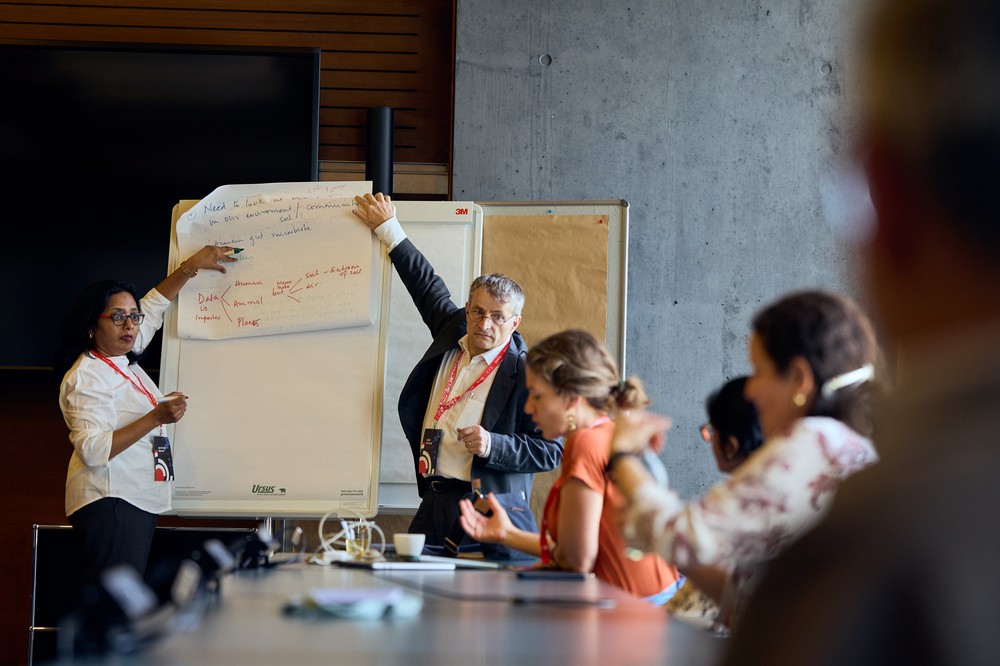
Throughout the Dialogue, which took place in Bern, Zurich, Basel and Geneva, Indian and Swiss participants were encouraged to step outside their disciplinary silos. In the first Dialogue, we carefully brought together a small group of key stakeholders and built trust. By the second edition, those same participants had opened up their own networks, expanding both the scope of the conversation and the possibilities for collaboration in AMR. Because we invested deeply in the first Dialogue, participants came into the second with a sense of ownership and our collaborators in Switzerland helped shape and curate the programme themselves. These exchanges surfaced shared challenges across contexts, as well as complementary strengths, opening up new possibilities for collaboration.
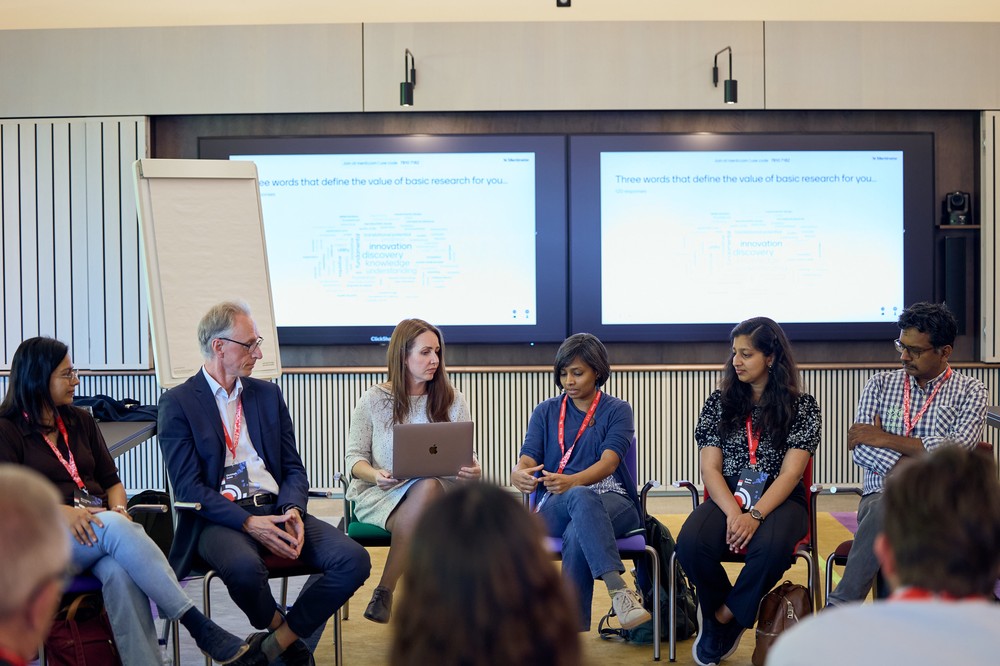
from lab to clinic, from policy to practice, and from experts to the public. This focus extended beyond formal sessions. Participants took part in site visits, informal exchanges and creative formats that created space for reflection, debate and rethinking. In the process, the Dialogue helped build trust, an essential, and often overlooked, ingredient in international scientific collaboration.
The outcomes of the 2nd Indo-Swiss AMR Innovation Dialogue reflected this broad approach. New research and innovation connections were seeded between Indian and Swiss institutions, and the importance of science communication as a core part of AMR action was reinforced. This led to public-facing initiatives, including an open call for an AMR Poetry Slam and Open Mic, inviting artists, writers and the wider public to engage with AMR beyond the language of policy briefs and clinical reports. To further these collaborations, an Indo-Swiss Joint Research Project open call on One Health and AMR is expected to be launched soon.
Tackling AMR requires not only better drugs and diagnostics, but also better conversations across borders, disciplines and communities. In doing so, the Dialogue turned shared concern into shared responsibility, strengthening long-term Indo-Swiss collaboration against AMR.