Exploring innovation hubs across the eastern US
New York is universally recognized as a global financial and cultural capital, and Boston is rightfully known as a leading center of academic research and life sciences innovation. Too often, however, they are treated as the only meaningful gateways to the eastern United States, obscuring the depth and diversity of innovation taking place in regional hubs across the country. For Swiss startups, these regional hubs offer many advantages, including lower barriers to entry, closer proximity to manufacturing, and lower costs. In 2025, Swissnex in Boston and New York made a deliberate effort to go beyond our home ecosystems, building connections and partnerships in Michigan, North Carolina, and Connecticut.
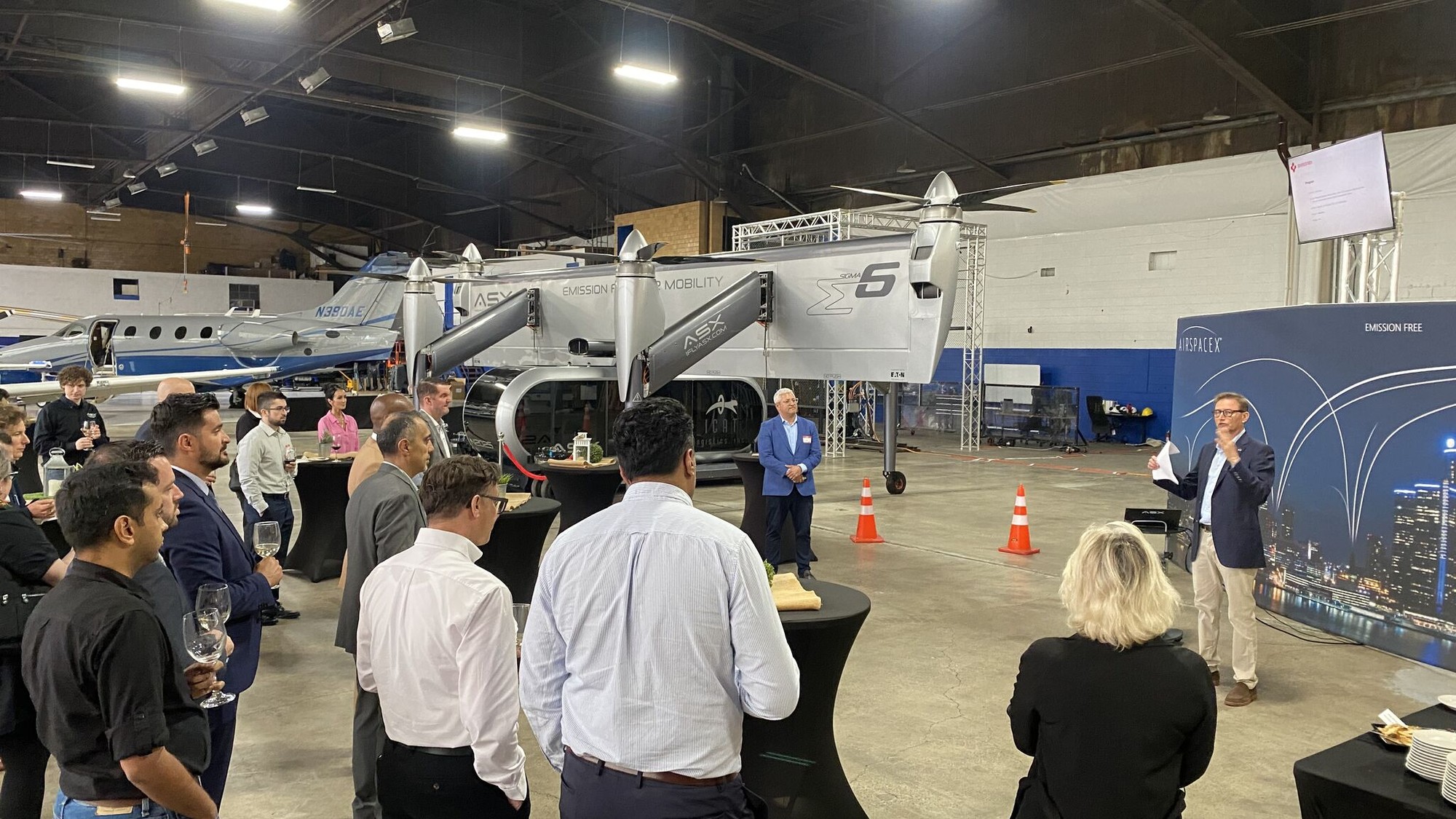
Our first stop was Detroit, where a new generation of innovators are reinterpreting the legacy of the city’s automotive industry with a focus on advanced automation and electric mobility. In May, Swissnex hosted a reception during Automate 2025, the largest robotics and automation conference in the Americas. Held in a historic airplane hangar, surrounded by multi-ton electric drones, the reception highlighted automation solutions from nine Swiss at the conference. Swissnex returned in September with Urban Landscape in Transition, a three-day workshop hosted at Newlab that explored the city’s socio-ecological transformation—shaped by the rise and fall of the auto industry—together with urban design experts from EPFL’s Lab of Urbanism (LAB-U), the Harvard Graduate School of Design, and local community partners..
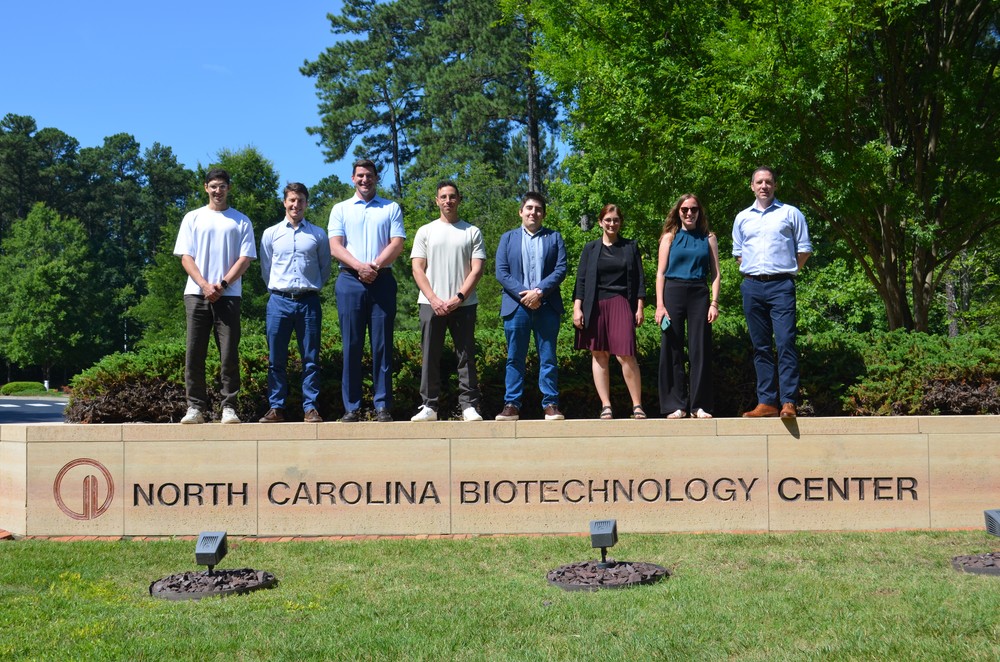
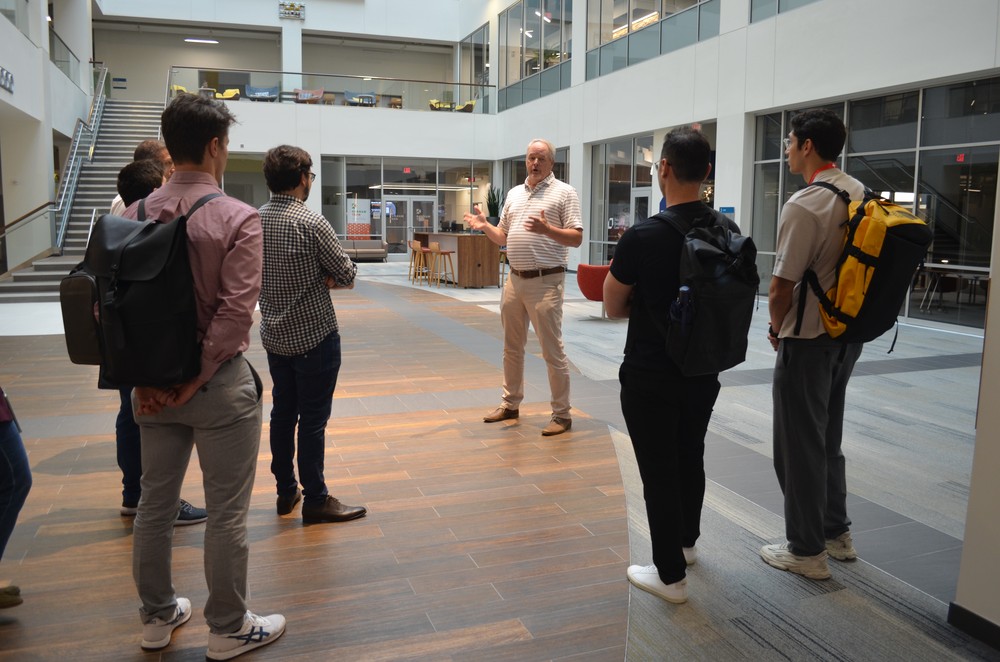
In June, Swissnex looked south to North Carolina’s Research Triangle, a fast-growing life sciences hub anchored by three Tier-1 research universities, the largest research park in the United States, and a strong manufacturing base. As part of the Startup Camps powered by Innosuisse, four Swiss biotech startups participated in an immersive program spanning Boston and the Research Triangle, engaging with investors, legal experts, accelerators, and industry partners to better understand regional strengths and pathways to market entry.
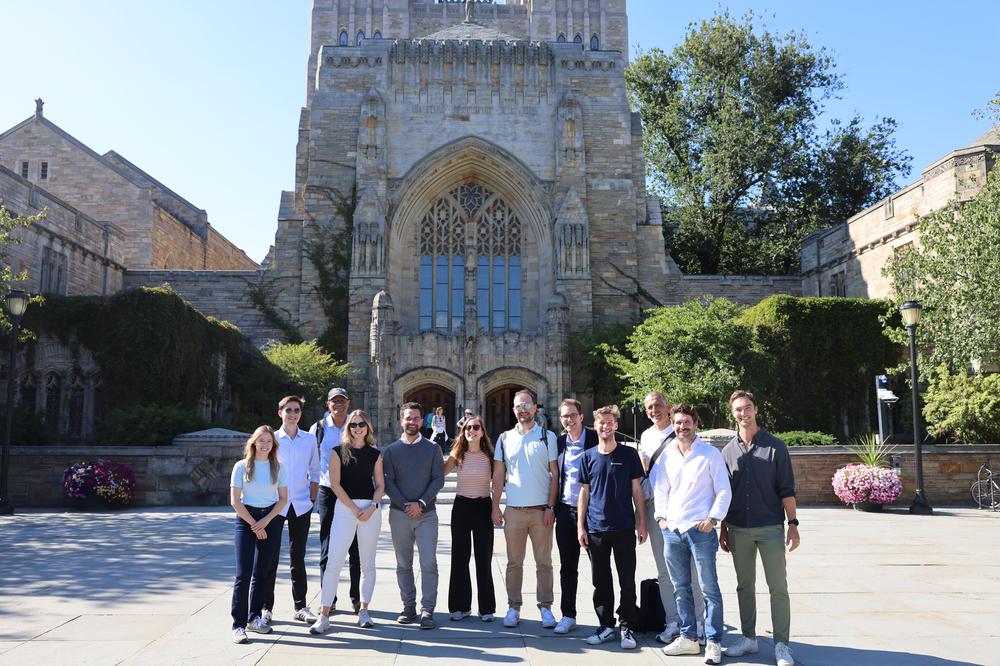
Finally, in September, as part of Climate Collider, the climatetech startup exchange powered by Innosuisse, Swissnex brought a cohort of founders to New Haven, Connecticut, where they connected with a local climate-focused startup incubator and pitched their solutions to regional climatetech investors.
Together, these engagements underscored the value of looking beyond traditional gateways to build more resilient, distributed networks. By meeting partners where innovative and creative work is being done, Swissnex is enabling Swiss researchers and innovators to engage the United States in all its regional complexity.