From Moonshot Dialogue to Expo Osaka: Swiss-Japanese Cooperation behind RoboFood
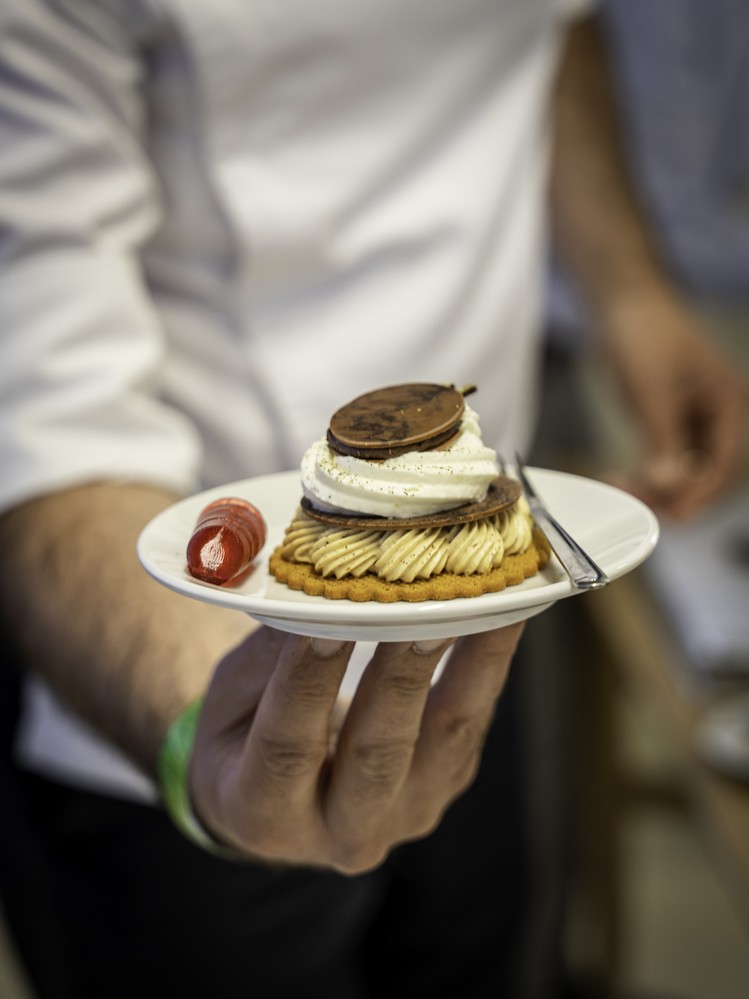
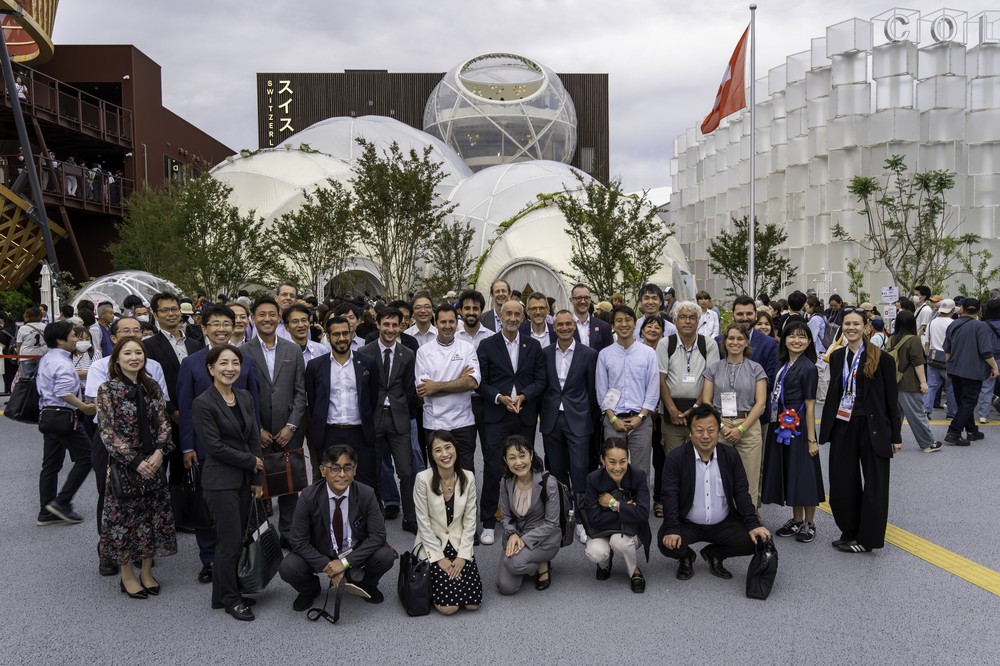
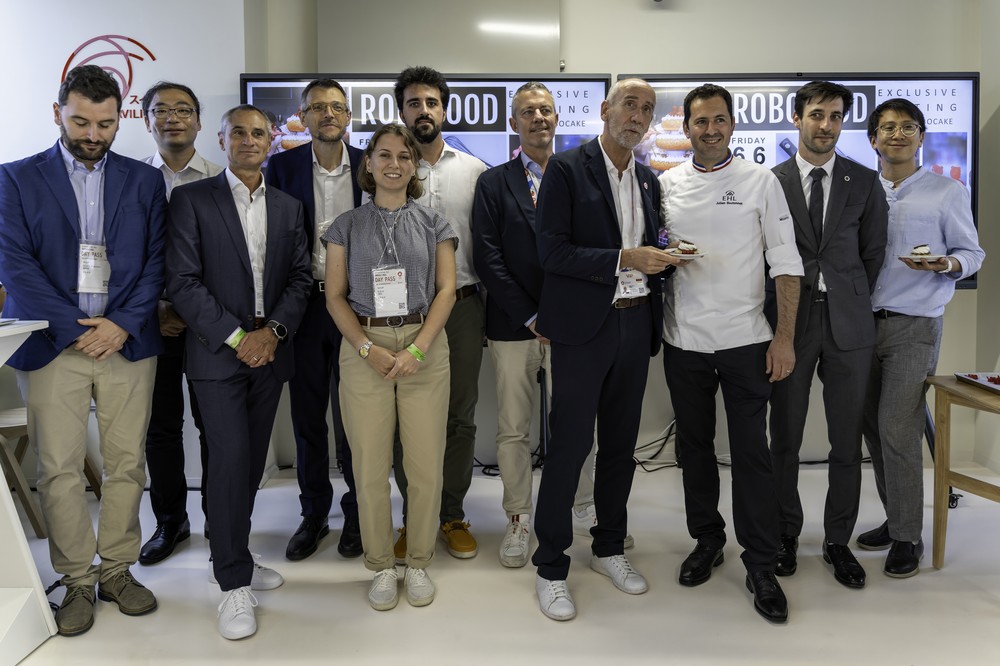
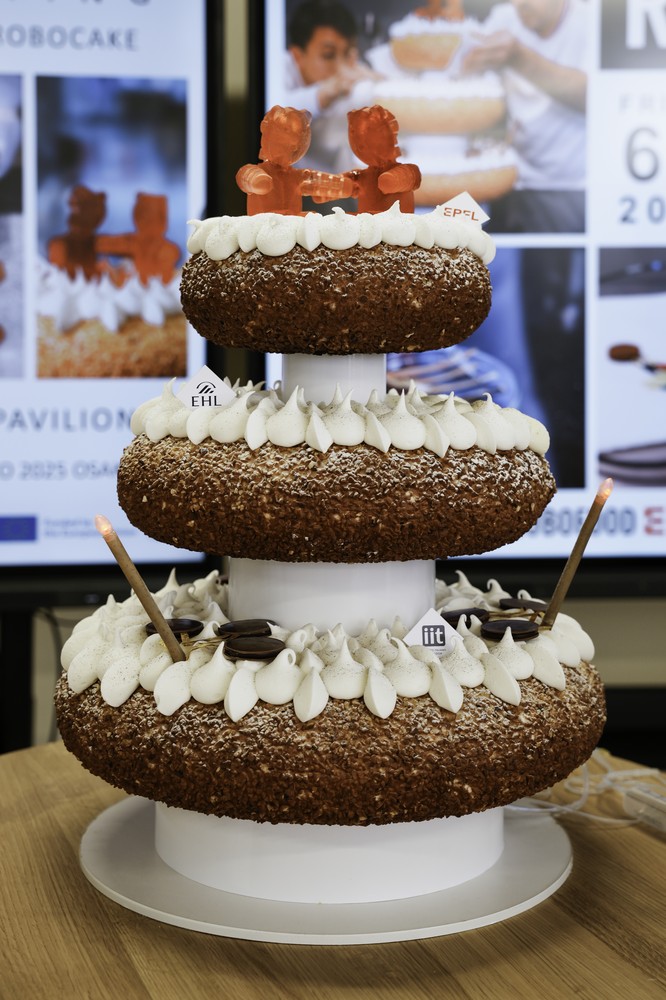
On June 6, the EPFL-led RoboFood consortium held the world’s first ever tasting of the RoboCake, a pioneering robotic edible dessert at the Swiss Pavilion at the World EXPO 2025 Osaka, Kansai. The occasion helped accelerate research, and enabled outreach to approximately one billion globally and made a timely mark of Swiss presence in EU-funded programs ahead of Japan’s participation to Horizon Europe.
RoboFood was selected to present advanced Swiss research at the Expo, building on discussions held over several years namely during Moonshot workshops in Japan and Switzerland which were supported by sustained government engagement, namely between the Japan Science and Technology Agency (JST) and the STO Tokyo. With the Expo in mind, the consortium advanced its research activities to deliver a compelling and safe public demonstration in collaboration with EHL Hospitality Business School, who contributed expertise in food science and culinary arts to ensure the RoboCake was both technically advanced and gastronomically refined.
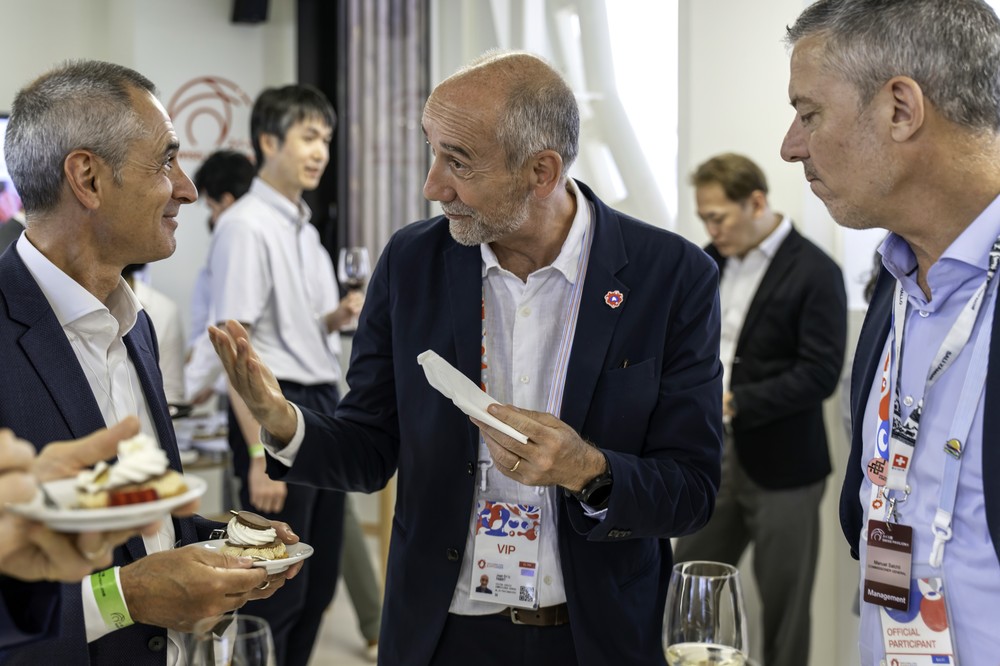
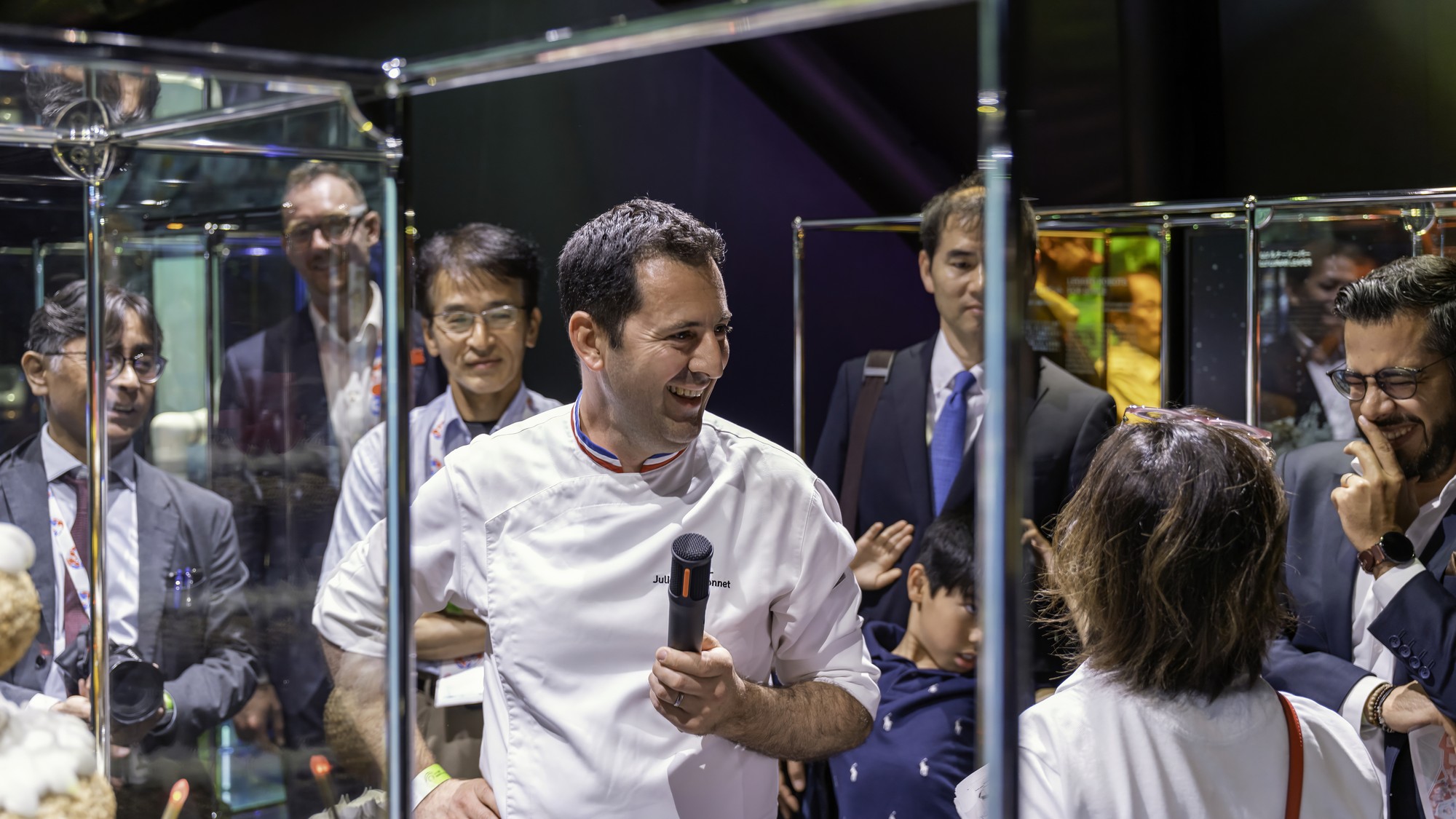
The Expo program was structured around three complementary formats: a press preview, an academic workshop, and a VIP tasting event. These activities engaged media representatives, the scientific community, senior government representatives including EU Ambassador to Japan Jean-Eric Paquet and Mr. Akira Tsugita from JST, and high-level guests from the confectionery and hospitality sectors. In parallel, the RoboCake was displayed for two months in the Swiss Pavilion exhibition space, reaching an average of 5’500 visitors per day. Read more on the RoboFood Day here: link
By late September 2025, EHL monitored the broad reach with coverage in over 140 media outlets across 30 countries, including Swissinfo.ch, CNN, Asahi Shimbun, La Repubblica, Wired, and Yahoo. Following the Expo, the RoboCake was installed as a permanent display in EHL’s new building, ensuring continued visibility and educational impact. The project also attracted strong interest from prominent international organizations. In particular, the United Nations invited the consortium to present the RoboCake at a VIP event attended by approximately 200 guests. While current technological limitations related to scalability did not yet allow for participation, the high level of interest and number of requests have motivated the RoboFood team to explore the creation of a spin-off company to further develop and commercialize the technology.
The RoboFood story is one deeply rooted in Swiss - Japanese collaboration. A Japanese PhD student at EPFL originally conceived the idea of making robots edible. Prof. Dario Floreano who leads the consortium reunited with his former student, Prof. Jun Shintake now Associate Professor at the University of Electro-Communications, Tokyo, to present their research at the Expo.
At the intersection of robotics, food science, and material engineering, RoboFood aims to create robots that can be eaten and foods that behave like robots. Under funding from the European Union, the project unites, EPFL, Wageningen University & Research, the Italian Institute of Technology, and the University of Bristol. Japan’s participation in Horizon Europe as associated country was announced in December 2025, while Switzerland’s EU Program Agreement (EUPA) was signed in November 2025 taking effect retroactively from 1 January 2025, paving the way to another channel for collaboration involving both countries.
Building on a successful year of collaboration and looking ahead to promising opportunities, the Science and Technology Office Tokyo remains committed to further strengthening ties between Switzerland and Japan in the fields of Education, Research, and Innovation.
For more information on the activities of the Science and Technology Office Tokyo of the Embassy of Switzerland in Japan: Tokyo - Swissnex